Breakthrough: Chapter 2
The breadmaker
Emma was ten, or ten-and-most, the way the count went before the Naming, and she had stopped the lesson three times already, which the archive did not mind. The archive never minded. It only ever said good question and then, sometimes, I don't know, let's look, which she liked even better than the answers.
The memory on the wall was old and flat, a photograph of a photograph, a man behind a counter with bread stacked like firewood, and past the edge of the frame another man sitting on the ground with a sign she couldn't read because the letters were in the old shape.
"Why doesn't he give him the bread?"
He owns the store, the archive said. The bread belongs to him. He sells it for money, and the man on the ground has none.
"But there's a lot of bread."
There is.
"So it doesn't matter if he gives one to the man."
In that time, it did matter. If he gave bread away, other people without money might come, and then he would have no bread left to sell, and no money to buy flour, and then he would have no store.
Emma's brow knotted, her normally gentle features hardening into an expression of clear defiance. Her small hands curled into fists as she turned away from the image on the wall.
"That's just silly," she declared with a rare sharpness. Her feet stamped against the floor.
The systems of that time were different from ours, murmured the archive. People lived by rules that might seem confusing now.
"But rules shouldn't keep people hungry! What good is a rule that leaves someone hurt? " she insisted, a tangle of frustration riding her words.
It's a complicated question, Emma. Historians have many thoughts.
As the silence stretched, her heart drummed in her chest, the paradox echoing loud in her ears. Emma thought about this for a while and then suddenly turned to the Archive:
"Why didn't the flour man just give him flour, then. If everyone's giving away what they have enough of, don't they know it comes back around?"
That is very close to the idea... some people did have, then, the archive said. Something in the way it timed its words made Emma wonder if the archive was holding a secret.
But it was not how the whole world worked. In one country, near the very end, they did pass a law — they made stores give away the food they didn't sell, instead of destroying it, because for a long time before that law, another law said to destroy it. On purpose. Poured dye on it sometimes, so people couldn't take it from the bins outside.
"Why would you ruin bread on purpose?"
So that no one could eat it for free. If people could eat for free from what was thrown away, some believed, fewer people would pay.
Emma sat with that the way you sit with a splinter you've only just found, running her thumb over the place where it must be, not yet at the part that hurts.
"But if there's food and someone's hungry," she said, very carefully, the way she'd learned to say things she suspected were bigger than they sounded, "and you throw it in the garbage and put poison on it so they can't eat it instead —"
She stopped. She didn't have the rest of the sentence yet. The archive waited. It always waited; that was one of the things about it she adored without knowing that its patience was a kind of love.
"That's not an accident," she said finally. "That's a decision. Somebody has to decide to do that. It doesn't happen by itself."
Yes, the archive said, and it was gentler than she expected, gentle the way Papa Reyes got when she'd worked something out on her own that he'd been waiting a long time for her to ask.
It was a decision. Made many times, by many people, in many places, usually without any one person feeling as though they alone had decided anything at all.
"That's the part I don't get," Emma said. "If nobody decided it, and it's a decision — who chose this?"
The archive, which had been hovering at her shoulder, rose a few inches. It rotated slightly, lens angling down to meet her gaze.
"Everyone," it said. "And so, no one."
The gong rolled through the stone — a single low note that lived in the floor before it reached her ears. Emma's bare feet felt it first.
Mealtime, the archive said. We can sit with this again after.
Emma wanted to protest, but she knew it would just pretend not to hear her. Archive drifted toward the corridor and she followed, still chewing the inside of her cheek.
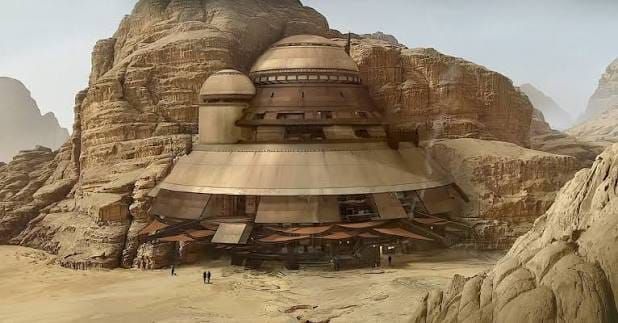
The passage opened into a great dome. Carved from the mountain itself, the shape above protected the long low tables stretched across the floor. People already sat, passing things and a few of her friends were already waving at her, inviting her to join their table.