Democracy In the Land of the Fearful
How the politics of fear paralyzes us, and why the path to true freedom is a daily, uncomfortable act.

Fear wants the correct answer now.
Fear demands we placate its dissatisfaction, its anxiety. It always makes us believe we are facing the end of times. It abhors the uncertainty inherent in Change.
Fear needs attention immediately. There is no time to prioritize what we should address first. We don't have the luxury of understanding how human relationships work. We don't think about conflict resolution until after voices get too loud and the chance of an understanding is crushed by our fists.
Fear is against something, somebody. It is not interested in questioning our foundations, or even considering that there are other ways—and that there are many. It does not bother itself with strategizing or explaining what happens after the Change. It needs no plan: Fear only knows how to react.
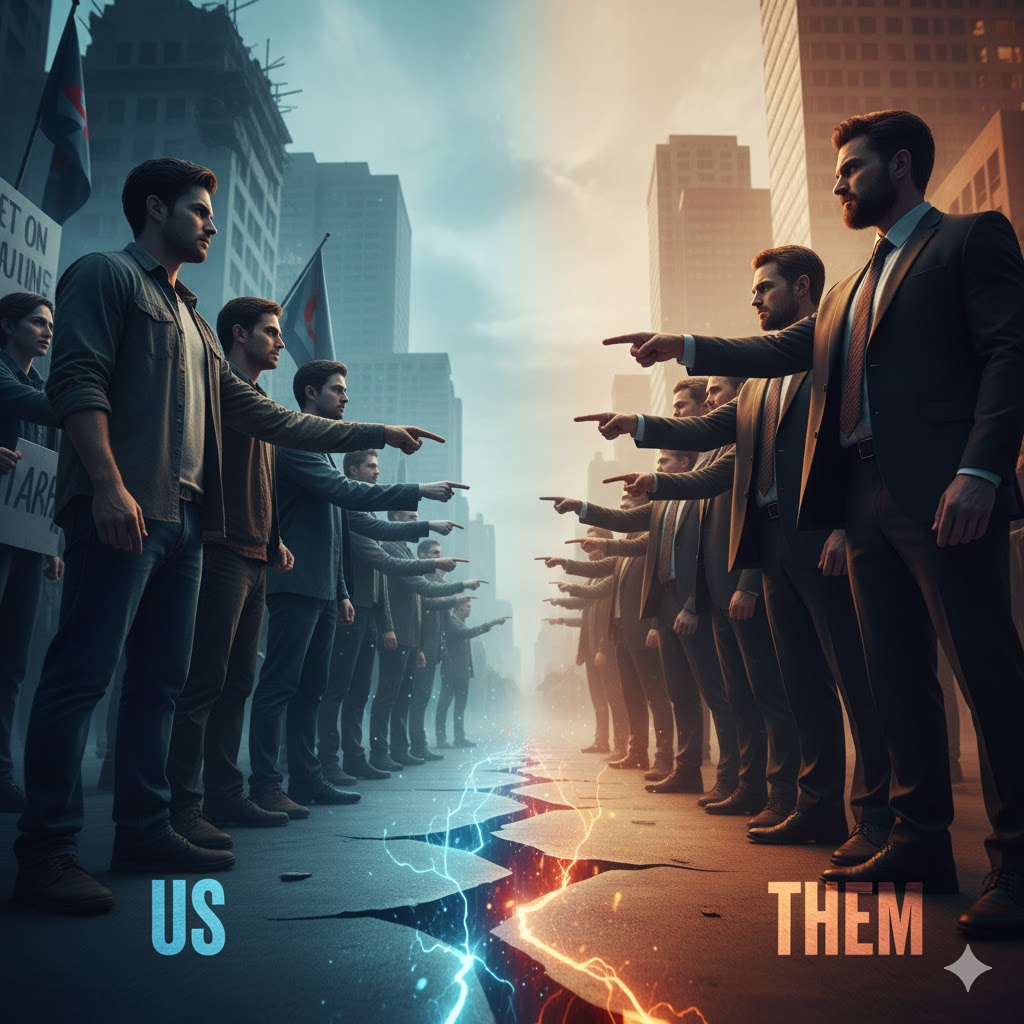
Unjustified power creeps into everything we can see or touch, and has done so since before any of us were born. The perfect slaves are those who don't know they are enslaved. We believe the mythology we are taught in schools, the narratives we are brainwashed into believing by the corporate or state media, the distortions fed to us by online propagandists: half-truths dressed as morality, presented to us as balanced dialogue.
We enjoy listening to, over and over, the same narratives about democracy, freedom, and equality, and embedded in them is the hate towards whoever we are told wants to take our liberty away from us, one way or the other.
We look at the wings, forgetting they are the bird, and we don't realize that the means are the end. *
Some ask for less government, yet the same people seem fine witnessing police forces brutally assault civilians, and treat them like cattle, or some animal who has no rights, who deserve no say in what is happening to them, and no love. They say, "those are the criminals, and criminals deserve punishment for their crimes" never comprehending the banality and the human tragedy implied in such a perspective. As long as it's legal, it must be just. To many, morality and legality are synonymous.
Some ask for more government, not understanding that the government's power can only be guaranteed by violence. That law enforcement and the military will be used when the ideas in the street threaten the livelihood or the money flow of those we pick to govern us, or their wealthy backers. Free speech in campuses being suppressed was one of the first signals; a soft start. This evolved into "Alligator Alcatraz," while many of us still grapple with the understanding that if somebody else's freedom of expression gets trampled, ours will, too.
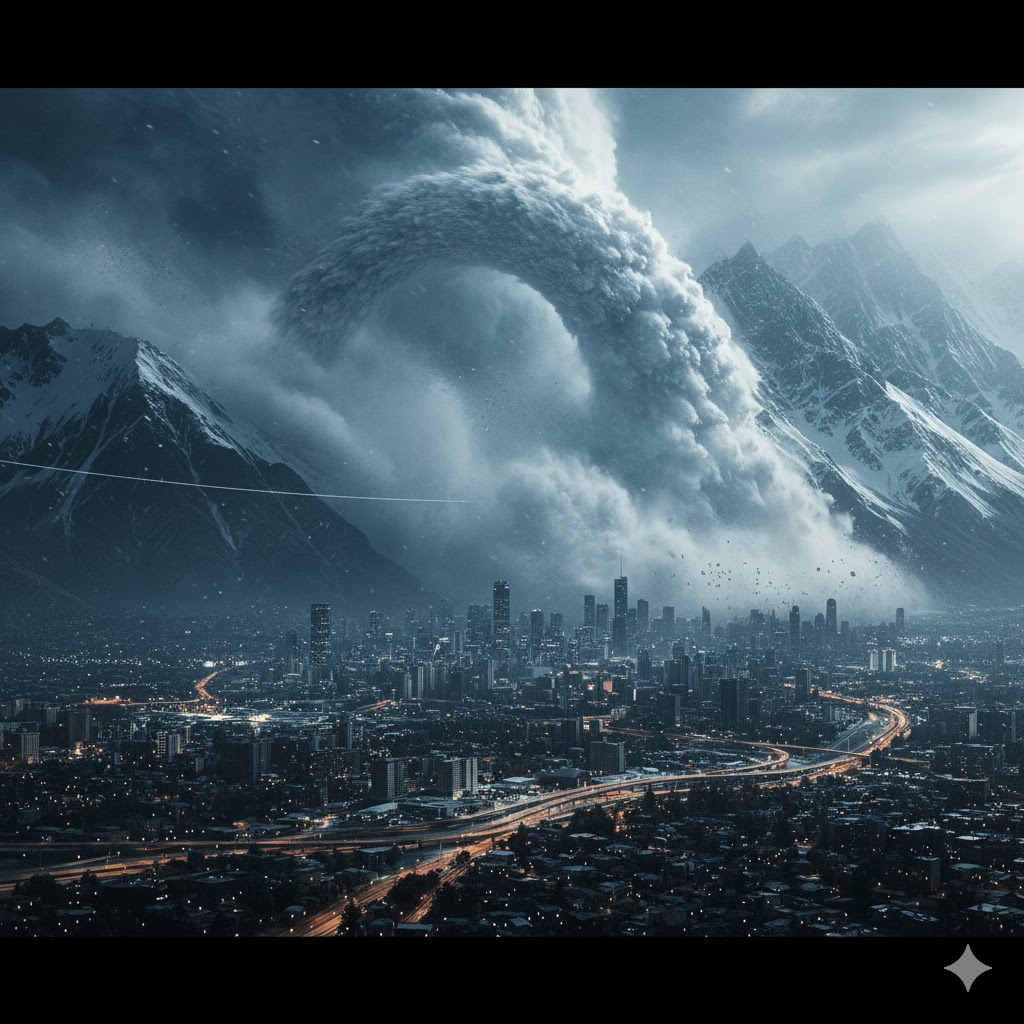
Change will come. The only question is how painful and long the transition will be.
We believe the system can be fixed if only we voted one more time—particularly this time around—so we could all go back to the liberty that once was, or that we will all have a chance to reach sufficient equality to prosper and have a happy life.
Life, Liberty, and the pursuit of Happiness is the American motto. Liberté, égalité, fraternité is how it sounds in French.
Yet we don't question or even think that violence is necessary and inherent in the system we believe we can fix. We don't really get a chance to hear divergent thought, or to listen to the voices of those upon whom democracy's bombs and ammo have been used, to bring them the "freedom" they didn't ask for.
Some ideas will always be taboo, and the people we trust to govern us are those who push the hardest for alternative viewpoints never to emerge.
Concepts like wage-slavery, that there is a way to think of possession and property as separate and distinct things, that the capitalist economic system necessitates the existence of poverty and of classes. The existing system creates authoritarian and oppressive social relationships where the propertyless (e.g., any individual or family in debt) are made dependent on the owners, leading to inequality.
That is a feature, not a bug.
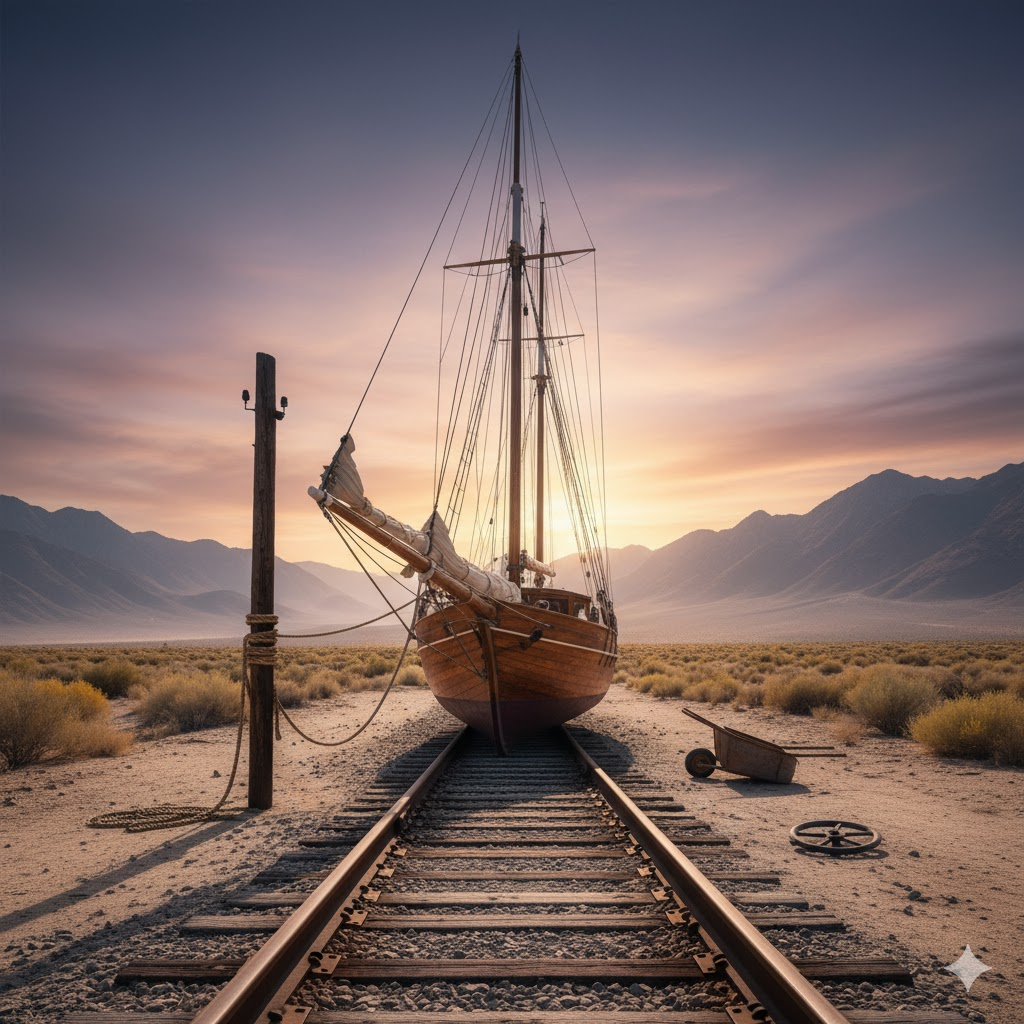
We trust we can steer the system the direction we believe it was always supposed to go towards. That we all can live better lives if we could only adjust the tax rate one direction or the other. The shift will autonomously self-nurture itself because once they all see it working, it will become self-evident.
So we negotiate the right to protest; we promise we will be calm and peaceful, and we are given a signed document that guarantees us the police will not interfere with our right to express public dissatisfaction. But we've got to keep it calm, or we will be reminded quickly of who has the legal right to use violence in the streets.
So, after we got our certificate to protest, we go into the streets and chant: "What does democracy look like? This is what democracy looks like!" We feel the fraternity of good souls around us, and we overdose on the potential of humanity and laugh at incredibly creative anti-orange slogans.
Many feel, for the first time, the effects of the euphoric high of acting for the betterment of all mankind. It's a divine feeling that requires no messiah.
Yet, wearing a keffiyeh or showing a rainbow flag can quickly make you persona non grata at such events. I wonder what else is written between the lines: in a city where whites are 60%, caucasians represented more than 90% of the people at the local No Kings protest.
So we feel compelled to go do what any good citizen would do: we delegate our responsibility to make things better to somebody else. We give our power away to the latest savior we see on TV and abdicate our responsibility to keep Change alive on a daily basis, with every single act we do.
We expect others will save us.
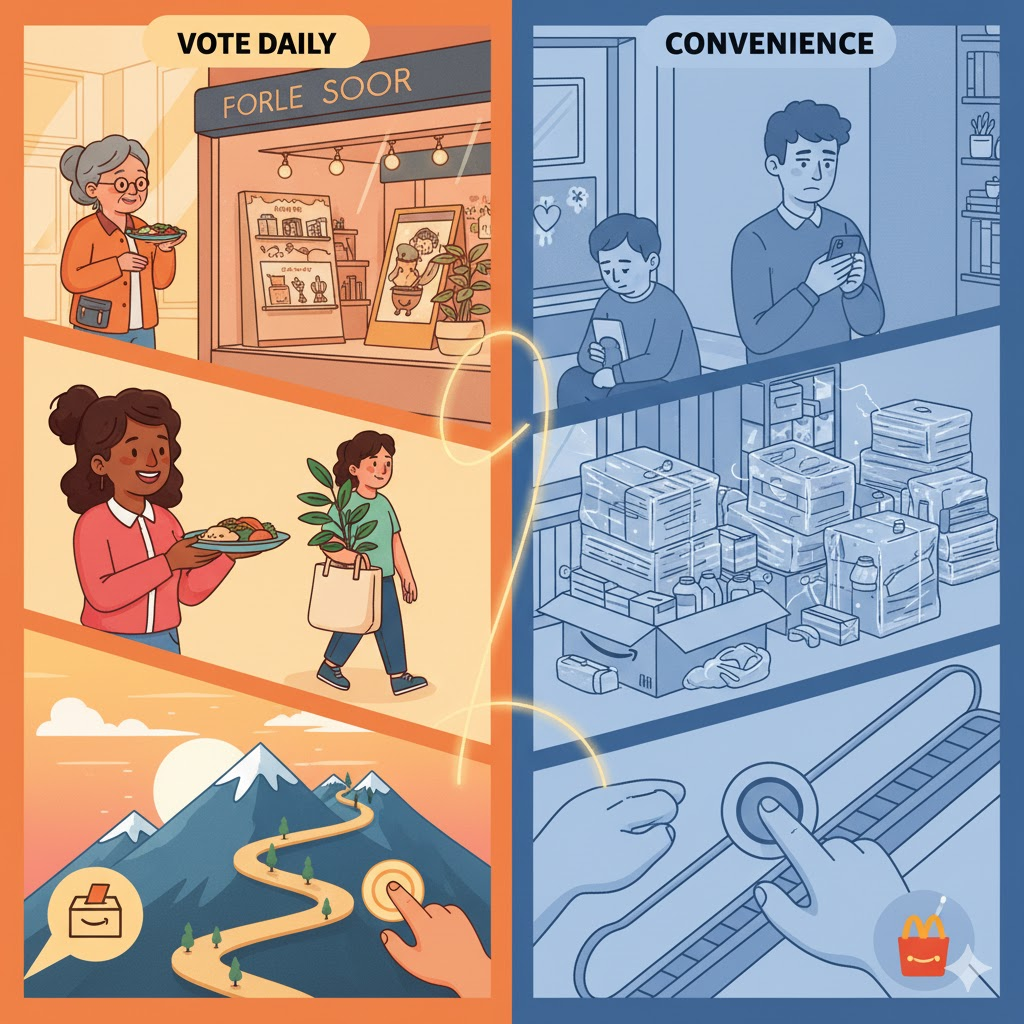
To vote is a daily act, and it is not something that requires a party, registration, or a piece of paper. The betterment of all of us... The shift, the change... The revolution (i.e. transformation of a political, social, or economic system) is not something done at the voting booth: it is something that never ends, and it is a continuous act of mindfulness. Of intention, without coercion.
You either live it, or you are faking it, consciously or unconsciously. Freedom is not convenient and is not comfortable: it requires constant work.
We vote daily by purchasing products at the grocery store or on Amazon. When we don't worry which tomato brand might be sold by a country that kills civilians, or from other countries that profit from genocide, war mongering, and authoritarianism, we vote for the status quo to stay unchanged.
We vote when we don't find the courage to take the day off of work to go to a protest.
We vote by not reading about or participating in general strikes.
We vote by criticizing the people who stop traffic without ever learning the history that led to such protests.

"Those who make peaceful revolution impossible will make violent revolution inevitable." (John F. Kennedy)
By not doing certain things, we are telling those in power that they can keep doing what they do: they know we have to put food on our tables, and that we cannot lose our jobs or we'd starve.
They also know that if we don't work, we won't even have access to health care. They know their power. Regular people do not.
Freedom is not something you vote for: freedom is something that arises from the choices we make and the actions we take day by day. And true Freedom is much like Love: it needs to be nourished every day.
Fear is reactionary, and it lives in the now. Love is proactive, and it demands your whole existence.
Thank you for your time! I hope you enjoyed the read.
References
- The Dispossessed - Ursula Le Guinn: "We are not seeking power. We are seeking the end of power! The means are the end. ... Only peace brings peace, only just acts bring justice!"
It's a political statement, rejecting the common justification that a violent or unjust action (the means) is acceptable if it leads to a desirable goal (the end). Another key passage explains the philosophy behind it, referring to the anarchist society's founder, Odo:
"Because she too was an Odonian, and the separation of means and ends was, to her too, false. For her as for him, there was no end. There was process: process was all."
- Process Over Product: The philosophy rejects the idea of a final "utopia" or "end goal" that, once achieved, stops all change. Instead, it says that society is a constant process.
- The "end" is not a destination you arrive at; the "end" is how you live your life right now.
- How You Do It Matters: The way you try to achieve something is more important than the goal itself, because the "way" is the only thing that's real. The actions you take (the means) define the result.