The Value of Sweat Equity in a Broken World
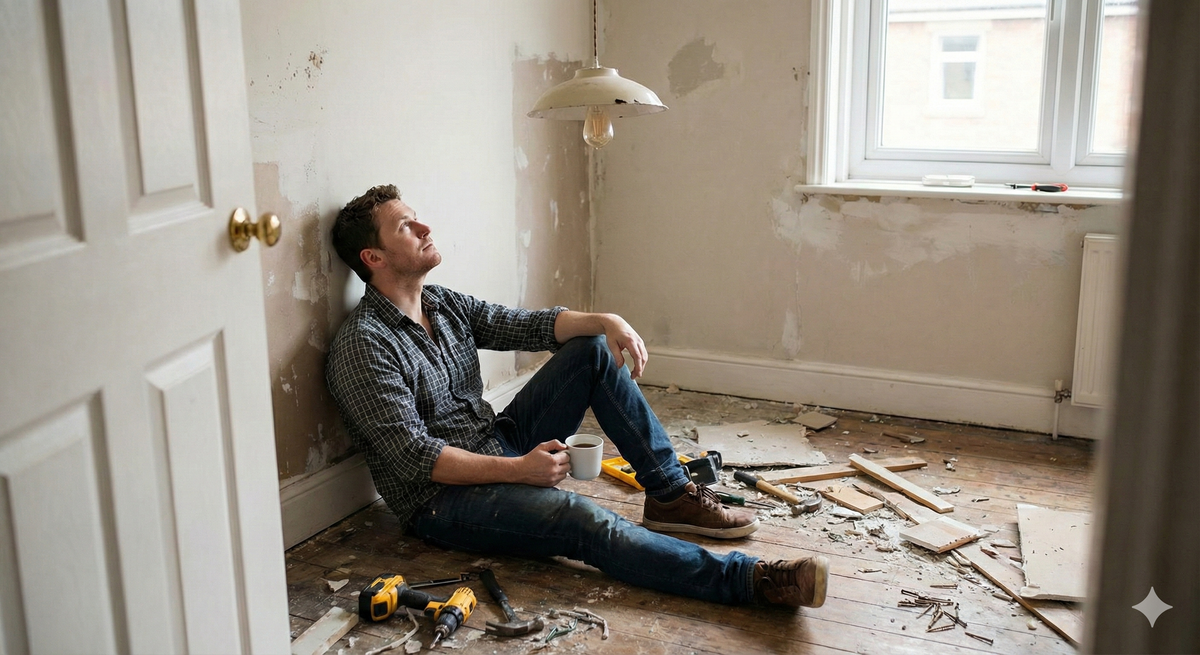
My hands are covered in drywall dust. My back aches and my shoulders are exhausted from sanding the ceilings, something I never thought to do before starting my home renovation. For the last three weeks, I have been tearing apart and rebuilding most of my house.
I am not a contractor. I am not a carpenter. Honestly, half the time, I am just a person staring at a YouTube tutorial on my phone, hoping I don’t mess it up or make it worse.
But as I stood there yesterday, looking at a wall that I framed, hung, and sanded myself, I felt something. It wasn't just pride. It was a connection. I knew where every screw was. I knew the struggle it took to get it straight. I even started personifying my house.
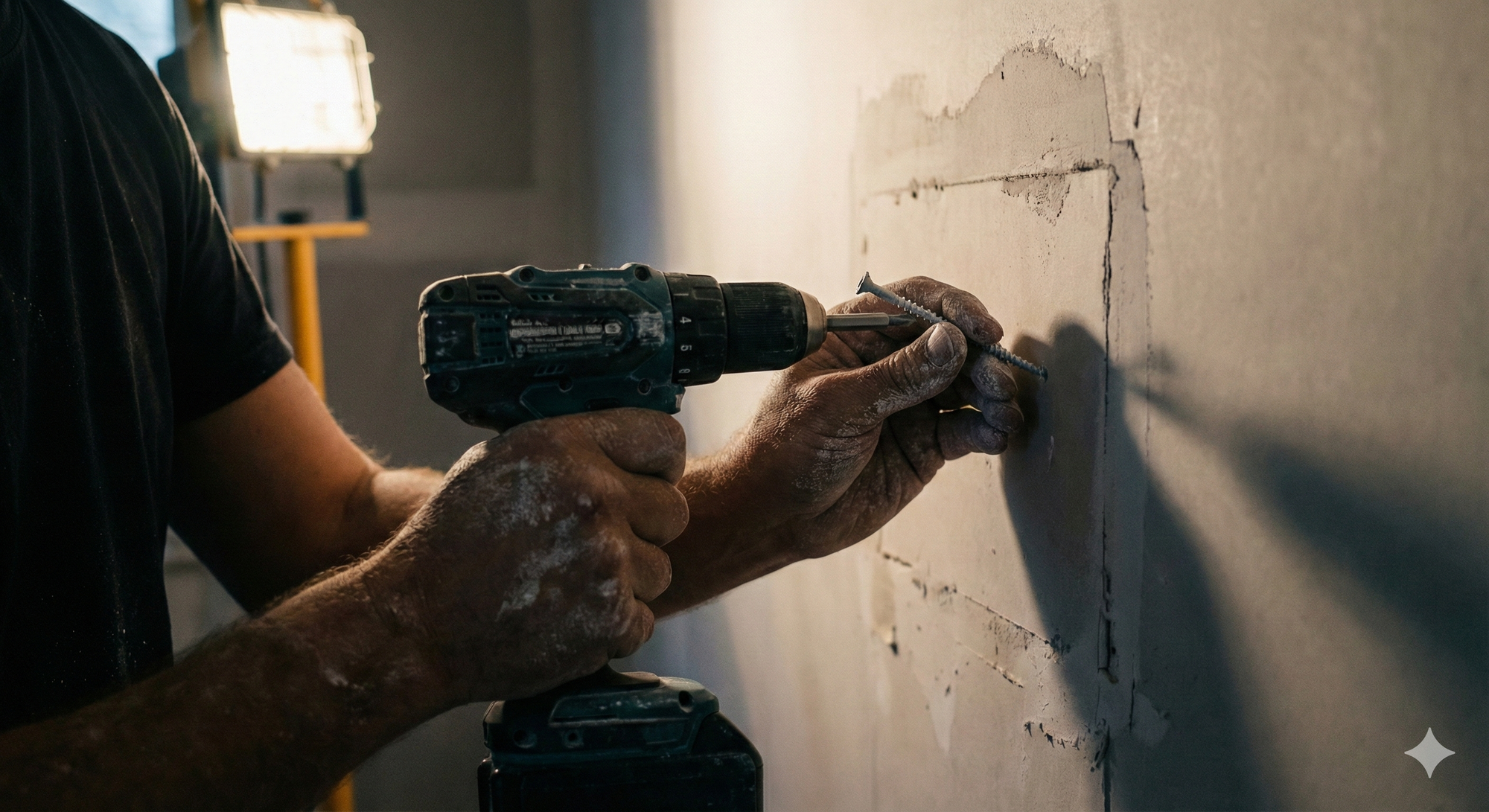
This experience forced me to look at the rest of my life. It made me realize how rare that feeling is. We live in a world designed to keep our hands clean. In doing so, it has made our lives empty.
The Rotate-and-Replace Lifestyle
Look around the room you are sitting in. How many things do you actually own?
I don’t mean how many things you have receipts for. I mean, how many things do you have a relationship with?
For most of us, the answer is "very few." We treat our homes like revolving doors for objects. Things arrive in a brown Amazon box and serve a purpose for a few months. The moment a handle snaps or a screen cracks, they leave via the trash can. They are immediately replaced by a shiny clone.

We call this "convenience," but that’s a lie. It is actually alienation. It is extreme consumerism that has us wasting our energy and effort.
When we treat the physical world as disposable, we start treating our own time and labor as disposable, too. We work hard to earn money to buy trash that breaks, just so we can work more to buy more trash.
There is a way out of this cycle, but it requires getting your hands dirty. It requires Sweat Equity.
The IKEA Effect (But for Real Life)
During my renovation, I spent hours trying to figure out some older wiring so my kitchen could have proper lighting. Turns out there is a thing called a "switch loop" in wiring. It was common at some point. It was frustrating. I dropped screws. I cut my finger with a wire. I cursed a few too many times. I sweated. I knelt in my attic over wires installed 80 years ago until my knees and back felt like they'd never be straight again.
But now, every time I flip that switch, I don't just see a light. I see my effort. I see something that I did, and I did it well. It was 100% worth the aching knees and back. I value that light fixture more than the lamp I bought online that arrived fully assembled.
Psychologists actually have a name for this: The IKEA Effect. It’s the idea that people value an object more when they help create it.
When you wrestle with an Allen wrench to build a wobbly bookshelf, that shelf becomes yours in a way a store-bought antique never could.
We can hack this psychological quirk to break our addiction to consumerism. When you choose to repair a broken toaster, patch your favorite jeans, or renovate part of your house, you are injecting sweat equity into your life. You are moving these things from the category of "consumable product" to "personal tool."
This isn't just about saving money, even though escaping debt is essential to No Future. It is about saving your sanity. It is about reclaiming your power in a world that wants you to be a passive consumer.
The "Right to Repair" is a Right to Self-Reliance
The system thrives on your incompetence.
Tech giants and appliance companies design products that are impossible to open. They glue batteries inside phones and use weird screws you can’t buy drivers for. They sell you extended warranties. Why? Because they want you to feel helpless. They want you to believe that the only solution to a broken object is to buy a new one.
Refusing to throw something away is an act of defiance.
When I was figuring out how to re-wire a light during my renovation, I wasn't just doing electrical work. I was demystifying the "black box." I realized that the house isn't magic. It is just parts. Parts can be understood, moved, and improved.
This builds Self-Reliance. It is one of the core pillars of No Future.
- If you can fix a leak, you are less afraid of water damage.
- If you can fix your bike, you are less afraid of being stranded.
- If you can build your own wall, you are less afraid of the world crumbling down.
From Sweat Equity to Mutual Aid
Let’s be real. My renovation hasn't been a solo mission. There were moments I was totally stuck. When I was putting new drywall on the ceiling, you bet that I needed help.
In a disposable culture, if your lawnmower breaks, you go to Home Depot. In a community-focused culture, you go to your neighbor.
This is where Mutual Aid stops being a buzzword and starts being a survival strategy. It is not just charity. It is the exchange of skills and labor to keep our collective world running without needing to swipe a credit card every time something malfunctions.
The Call to Action
We cannot stop the landfills from filling up overnight. We cannot overthrow the economy of planned obsolescence just by tweeting about it.
But we can choose to fix one thing.
This week, find something in your house that is broken or worn out. It doesn't have to be a home renovation. Maybe it's a hole in your sweater. Maybe it's a loose cabinet door.
Do not buy a replacement. Go to YouTube. Find a tutorial. Borrow a tool.
Fix it.
It might be frustrating. You might fail. But in the attempt, you will stop being a consumer and start being a builder. You will feel the weight of the object in your hands, and for the first time in a long time, you will truly own it.
Build what you need today. There is no future in the landfill.